
Planning a trip to the Kingdom of Wonder? Whether you are heading to the ancient temples of Angkor Wat or the bustling streets of Phnom Penh, keeping your devices charged is essential. Nothing kills a travel vibe faster than a dead camera battery or a fried hair dryer because of a voltage mismatch. This guide covers everything you need to know about Cambodia plug types, voltage compatibility, and where to find the right gear so you can travel with peace of mind.
What Plug Type is Used in Cambodia? (A, C, and G)
One of the most confusing aspects of travel in Southeast Asia is the variety of wall outlets. Cambodia is unique because it uses a mix of three different plug standards, often combined into "universal" sockets in hotels to accommodate international visitors.
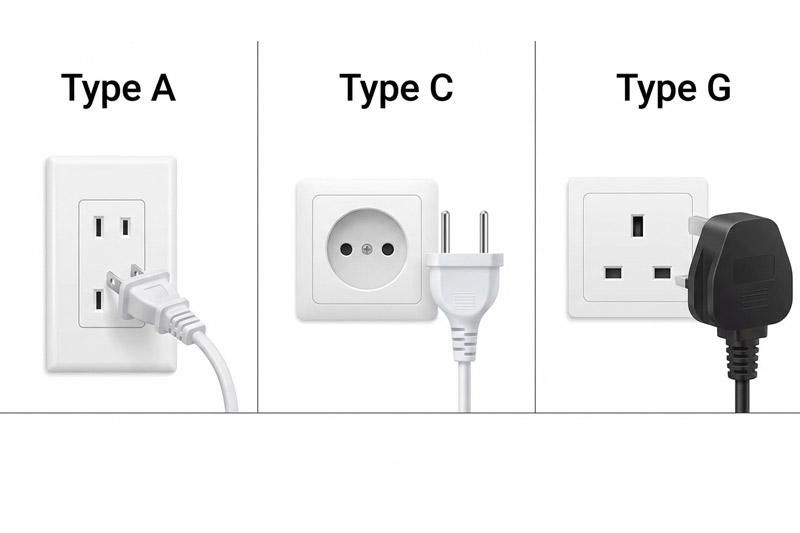
Here are the three main types you will encounter:
Type A (The "Flat" 2-Pin): This is the standard plug used in the USA, Canada, and Japan. It has two flat parallel pins. In Cambodia, this is extremely common in older buildings and standard extension cords.
Type C (The "Round" 2-Pin): Often called the "Europlug," this type has two round pins. It is the standard across most of Europe and Asia. Type C plugs fit into almost all Cambodian wall sockets.
Type G (The "British" 3-Pin): This bulky plug with three rectangular pins (used in the UK, Singapore, and Malaysia) is sometimes found in luxury hotels or newer developments in Cambodia, though it is less common than Types A and C.
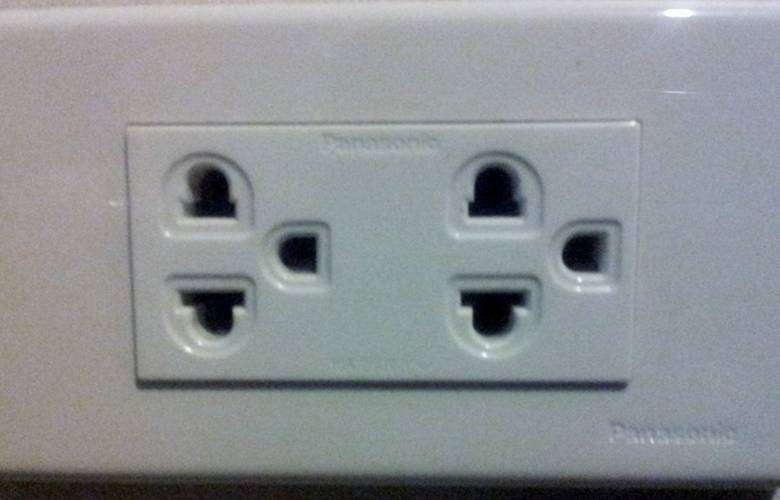
The "Combi" Socket: Most hotels and guesthouses in Cambodia install universal sockets. These clever outlets are designed to accept both Type A (flat) and Type C (round) plugs without an adapter. However, if you have a grounded plug (3 pins) from the US or Europe, or a Type G plug from the UK, you will likely need a travel adapter for Cambodia.
| Plug Type | Description | Commonly Found In |
|---|---|---|
| Type A | Two flat parallel pins (North American style). | Older hotels, guesthouses. |
| Type C | Two round pins (European style). | Most common standard socket. |
| Type G | Three rectangular pins (UK style). | Luxury hotels & British-built buildings. |
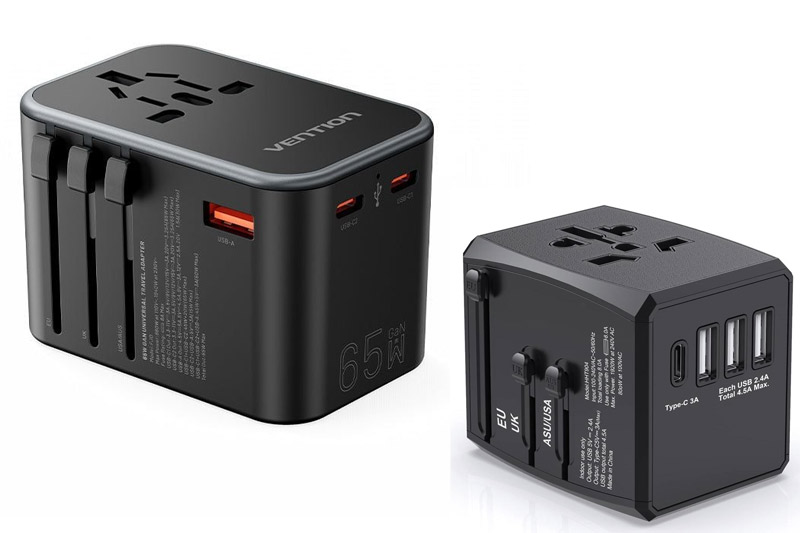
The Verdict: We recommend bringing a Universal Travel Adapter that covers all three types. This ensures you can charge your camera regardless of where you stay.
Recommendation: The safest bet is to bring a universal travel adapter. If you prefer a simple solution, a basic Type A to Type C adapter usually covers 90% of situations.
Voltage & Frequency: Do I Need a Converter?
This is the most critical safety section of this guide. Plugging the wrong device into a Cambodian socket can result in sparks, smoke, and ruined electronics.
Standard Voltage: 230V
Standard Frequency: 50Hz
If your home country uses 110V-120V (like the US or Canada), you must be careful. If your country uses 220V-240V (like the UK, Europe, or Australia), your electronics are generally safe regarding power flow.
For Travelers from the USA (110V vs 230V)
The United States operates on 120V electricity. Cambodia operates on 230V. This is a significant difference.
1. Check Your Labels (The Dual Voltage Rule): Look at the small print on your device's power brick or charger (e.g., your iPhone block, laptop charger, or camera battery charger).
Safe: If it says
INPUT: 100-240V ~ 50/60Hz, it is dual voltage. You do not need a voltage converter. You only need a plug adapter to make it fit the wall. Almost all modern phones, MacBooks, and tablets fall into this category.Unsafe: If it says
INPUT: 110Vor120Vonly, do not plug it in. You need a heavy, expensive voltage step-down converter.
2. High-Wattage Appliances: Hair dryers, curling irons, and electric shavers from the US are rarely dual voltage. If you plug a 110V US hair dryer into a 230V Cambodian outlet, it will overheat and burn out immediately.
Advice: Leave the US hair dryer at home. Buy a cheap one locally or use the one provided by the hotel.
For Travelers from the UK/Europe
United Kingdom:
Voltage: The UK runs on 230V, which matches Cambodia. You do not need a converter.
Plugs: You will usually need a travel adapter. While some fancy hotels have Type G sockets, most guesthouses only accept Type A or C. Bring a "UK to Type C/Universal" adapter.
Europe:
Voltage: Europe runs on 230V, matching Cambodia perfectly.
Plugs: Your standard Type C (Europlug) will fit directly into almost every socket in Cambodia. However, if you have a thick, round grounded plug (Type E or F), it might not fit into the flat, ungrounded sockets found in cheaper hostels. A simple, non-grounded Type C adapter is a good backup.
Where to Buy Adapters in Cambodia (Phnom Penh & Siem Reap)
Forgot your adapter? Don't panic. Electronic accessories are widely available and affordable in major Cambodian cities.
1. Convenience Stores (Everywhere): Chains like 7-Eleven, Circle K, and Smile Mart are popping up all over Phnom Penh and Siem Reap. They almost always stock basic universal adapters near the counter for $2–$5 USD.
2. Local Markets:
Phnom Penh: Visit the Russian Market (Tuol Tom Poung) or Central Market (Phsar Thmei). There are entire aisles dedicated to electronics. You can haggle for a sturdy adapter for around $3.
Siem Reap: The Old Market (Phsar Chas) has plenty of stalls selling travel gear.
3. Supermarkets: For higher quality, safe adapters, head to Aeon Mall (Phnom Penh) or Lucky Supermarket (available in both cities). They sell branded electrical gear that is less likely to break than market stalls.
4. Electronics Shops: Streets like Monivong Boulevard in Phnom Penh are lined with dedicated computer and phone shops that sell genuine accessories if you need a specific replacement charger.
You can easily find them in major cities:
- Phnom Penh: Available at Aeon Mall or local "Minimarts" like Circle K.
- Siem Reap: The Old Market (Psar Chaa) has stalls selling cheap adapters for $1-$3 USD.
- On Tour: Ask your Cambodia Tours guide! We can point you to the nearest reliable electronics shop.
Practical Tips for Charging Devices on Tour in Cambodia
Power infrastructure in Cambodia has improved massively, but it can still be unpredictable in rural areas. Here is how to keep your battery green:
Bring a Power Bank: This is non-negotiable. Long days exploring Angkor Wat or riding buses between cities often mean no access to wall outlets for 8-10 hours. A 10,000mAh or 20,000mAh battery pack is ideal.
Beware of Voltage Fluctuations: In rural areas or islands like Koh Rong, the power grid can be unstable. Surges are possible. If you are charging an expensive laptop, use a surge protector or unplug it during storms.
Limited Outlets: Older guesthouses may only have one spare outlet, often located inconveniently far from the bed. A multi-port USB charger is a lifesaver, allowing you to charge two phones and a camera from a single socket.
Bus & Boat Power: Some VIP buses advertise USB charging ports, but they are frequently broken or output very low power. Never rely on transport for charging; treat it as a bonus if it works.
Planning Your Cambodia Adventure?
Understanding the Cambodia power socket situation is a small but vital part of travel prep. By checking your voltage labels and tossing a universal adapter in your bag, you ensure that your phone is always ready to capture the sunrise over Angkor Wat.
Double-check your high-wattage appliances, grab a sturdy power bank, and you are ready to explore the Kingdom of Cambodia worry-free!
